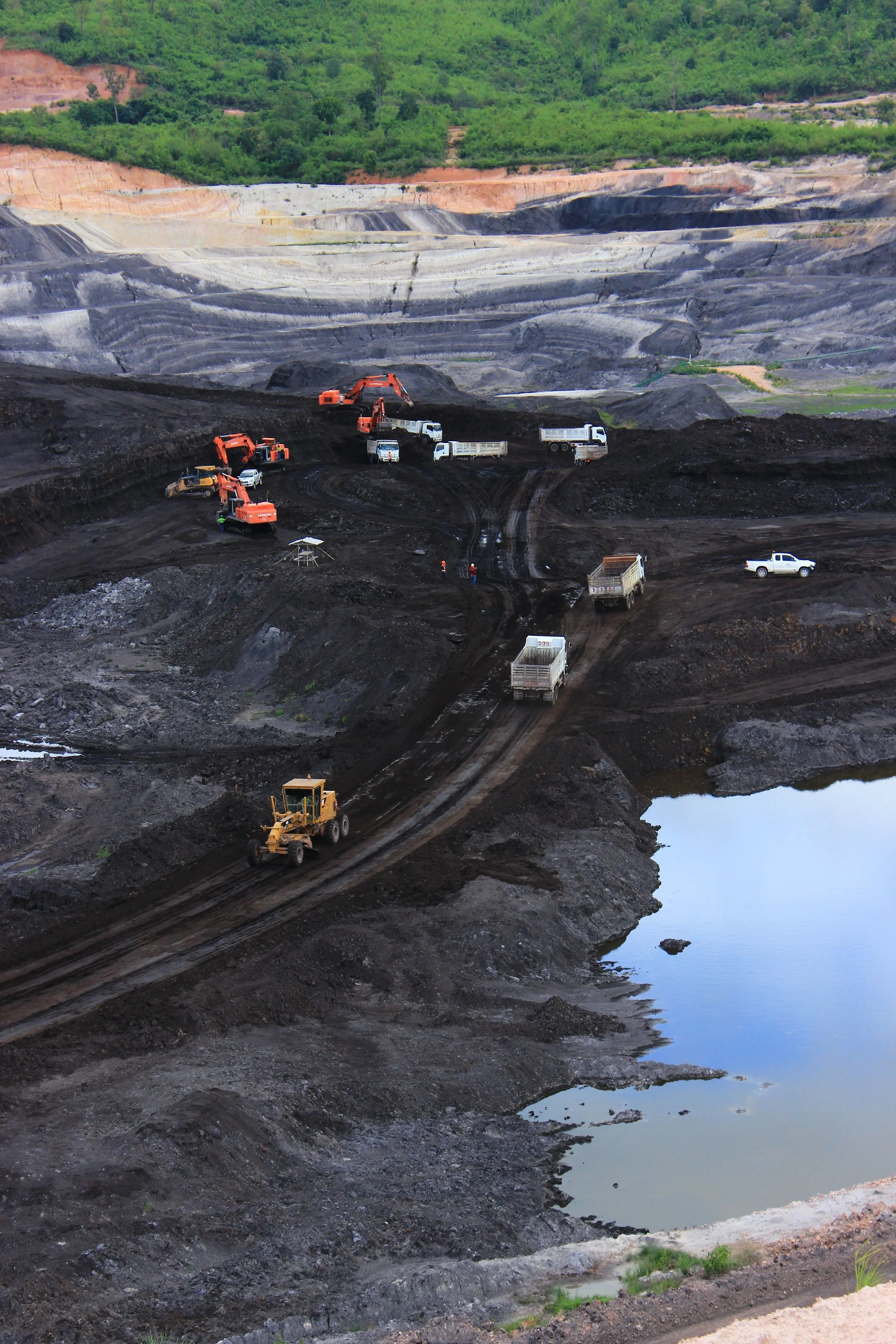
Eliminating Deep Seepage from a Tailings Storage Facility
Legacy tailings storage facilities present one of mining's most persistent environmental liabilities. Conventional approaches address deep seepage through capital-intensive barriers and active interception systems — solutions that are expensive to install, require ongoing maintenance, and remain vulnerable to single-point failure in the heterogeneous subsurface environments where tailings facilities typically sit. The fundamental problem is that these approaches attempt to seal every potential leak rather than addressing why leaks organize and persist in the first place.
CCG reframed the problem at the system level, targeting the physical conditions that allow subsurface water to organize into persistent, long-range transport pathways. The proposed architecture combines distributed hydraulic connectivity disruption with passive immobilization of transport-capable water states — producing a permanent, maintenance-free reduction in seepage risk that tolerates incomplete subsurface knowledge and performs reliably under cold-climate conditions without ongoing intervention.
Relevant consulting applications:
Environmental liability assessment and remediation strategy for mining and resource extraction operations
Subsurface risk framing for facilities where conventional barrier approaches have failed or are cost-prohibitive
Regulatory compliance strategy for tailings facilities under increasing environmental scrutiny
Cross-domain problem reframing for engineering teams where incremental improvement of existing containment approaches has reached a ceiling
Submitted to Wazoku/InnoCentive open innovation challenge on behalf of U.S. Steel Minntac — advanced to first stage of evaluation.